

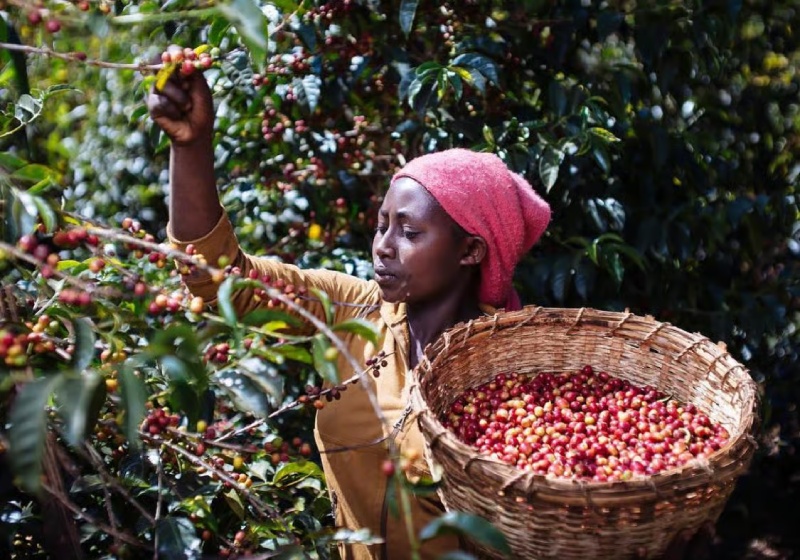
If Brazil is the production giant, Ethiopia is the legendary heart of coffee. According to legend, this is where coffee was born, and the aromatic diversity of Ethiopian beans continues to fascinate coffee enthusiasts around the world.
In this article we explore the specifics of Ethiopian coffee: the famous regions, unique varieties, distinct aromas and the social and cultural impact of this local coffee.
Cradle of legend
The history of coffee begins in the mountains of southwestern Ethiopia, where, according to tradition, a shepherd named Kaldi noticed how his goats became restless after eating the fruit of a mysterious shrub. This, of course, was the coffee plant and its discovery would change the world.
What makes Ethiopian coffee so special?
- It is considered the coffee with the most complex natural aromatic profile
- It grows in the wild (coffee grown in forests or in gardens), in ecological conditions
- It is processed both with natural methods (drying on African beds) and washed
- It has a lively, fruity acidity and evident floral notes
Regions famous for Ethiopian coffee
- Yirgacheffe – The most famous area for specialty coffees.
- Profile: floral, citrus, black tea notes, vibrant acidity.
- Altitude: 1,700–2,200 m
- Sidamo (now Sidama) – Vast region, with various microclimates.
- Profile: light to medium body, aromas of tropical fruit, peach, jasmine.
- Altitude: 1,500–2,200 m
- Click – An emerging area, appreciated for its natural riches.
- Profile: sweet, with notes of berries, plums, red wine and velvety body.
- Harrar – The eastern area, arid, with a distinct profile.
- Profile: natural berries, bitter chocolate flavour, wine, candied fruit, spices.
Types and classifications
Ethiopia has thousands of indigenous coffee varieties, many of which are still scientifically unknown. Therefore, instead of commercial varieties (as in Brazil), terms such as:
- Heirloom – meaning “heritage” – for traditionally bred local varieties.
- Garden coffee – grown in family gardens.
- Forest coffee – grown in forests, completely wild.
- Semi-forest coffee: a combination of the two.
The processing is:
- Natural (dry processed) – the fruits are dried whole on African beds, offering body and sweetness.
- Washed: the pulp is removed, which enhances its clarity and acidity.
Aromatic profile – the unique experience of Ethiopian coffee
Ethiopian coffee is distinguished by:
- Floral notes (jasmine, rose, lavender)
- Fruity notes (blueberry, peach, citrus, plum, mango)
- Bright acidity, sometimes similar to white wine
- Delicate to medium body
- Clean aftertaste, often sweet or floral
This isn’t conventional coffee – it’s a multi-sensory experience, ideal for alternative methods like V60, Chemex or AeroPress. In espresso it is an excellent choice for connoisseurs, but it may seem too «light» for those used to classic Italian espressos.
Benefits and impact
✔ Ethiopia is the world’s fifth largest coffee producer.
✔ Around 15 million people earn their living from coffee.
✔ Ethiopian coffee supports traditions, family farms and sustainable methods.
✔ The state encourages exports of specialty coffee, which increases farmers’ incomes.
Interesting statistics
- Ethiopia produces fish every year 7 million bags 60 kilograms
- About 95% of Ethiopian coffee is grown by smallholders
- There are over 1,000 genetic varieties of Arabica, many of which are unique to this country
- Ethiopia is the only African country that consumes a significant portion of its production domestically
- Every year, Ethiopia hosts events such as Afromet and Cup of Excellence Ethiopia, which showcase rare and high-quality coffees
Espresso Café Tips
If you want to discover complexity and sophistication coffee from Ethiopiawe recommend the assortments available on the site:
Ethiopia is not just a producer: it is a living history of coffee. Here every grain tells a story thousands of years old. If you love coffee with personality, try Ethiopian origins and let the aromas transport you to the heart of Africa.
Stay with us in the next episode of «Journey to the World of Coffee», where we will explore another fascinating country in this aromatic universe.
latest posts published
Because freshly roasted coffee is better

How do you take care of your coffee machine?

What type of coffee does TOGO recommend if you have heartburn?

Automatic or manual espresso machine for home?

How we choose specialty coffee

Inspiration: Special coffees that win hearts
Discover the impact of sustainability in the specialty coffee industry
Coffee from Ethiopia – The birthplace of coffee and the treasure of natural flavors
settings, dosage and practical tricks