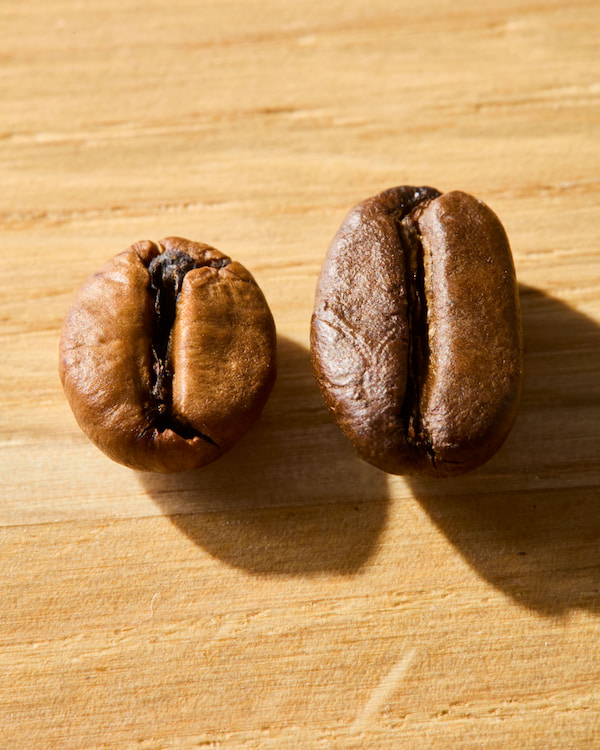

When it comes to coffee, Brazil is inevitably on everyone’s lips. It is the largest producer and exporter of coffee in the world, with a tradition dating back over 150 years. But it is not just a country of quantity: Brazil surprises with quality, diversity and coherence. In this article we explore what makes Brazilian coffee so special.
Coffee from Brazil: a varied landscape
Brazil boasts excellent natural conditions for growing coffee: different altitudes, fertile soils and a warm climate with regular rainfall. These elements create the perfect framework to produce a wide range of flavor profiles.
The most famous producing regions are:
- Minas Gerais – The largest coffee region, known for its balanced coffees, with hints of chocolate and nuts.
- San Paolo (Mogiana region) – Recognized for its mild acidity and round body.
- Holy Spirit – The area where mainly Robusta coffee is produced, but also Arabica with a rustic character.
- Bay – Modern region, with high quality products and sustainable practices.
Types and classifications
Brazil mainly produces coffee Arabicabut also Robust (locally known as Conilon). Brazilian coffee is classified based on:

- Variety (Variety) – Bourbon, Catuai, Mundo Novo, Icatu, etc.
- Processing method – Natural (uscat), Semi-washed (natural pulp), Completely washed.
- Screen size – Grain size measurement, similar to Columbia Supremo/Excelso.
- Scor SCA (Specialty Coffee Association) – For coffee specialties.
Aromatic profile: how does it differ?
Brazilian coffee is often described as:
- Sweet, with hints of chocolate, hazelnut, caramel
- Full-bodied, with a velvety consistency
- Low acidity, making it easy to drink
- Consistency, ideal for espresso, blends and coffee with milk
This classic Brazilian flavor profile is ideal for those who prefer coffee round, easy to enjoy and versatile. The chocolate and caramel notes create a familiar, comforting sensation, while the hazelnuts add a light complexity without overpowering. Precisely for this reason natural balancesBrazilian coffee is often used as a base for premium blends, being able to harmonize different flavors and provide consistency in every cup.
In espresso, the velvety and full-bodied consistency makes Brazilian coffee a true ally of the barista: the cream is rich, and the taste remains present even in combination with milk, which makes it excellent for cappuccino or flat white.
Reduced acidity contributes to a pleasant experience for those who avoid overly acidic or fruity notes. In other words, it is the coffee that is aimed at both connoisseurs and those starting the journey in the exploration of aromas.
These characteristics make it a favorite in cafes and bakeries around the world.
Relevant statistics

- Brazil produces fish every year 2.6 million tons of coffee
- Approximate 40% of the world’s Arabica coffee comes from Brazil
- It has over 300,000 coffee plantations, many of which are small and family-run
- It is a leader in agronomic innovation and sustainability in coffee production
- Brazil exports coffee to over 120 countries, the largest markets being the United States, Germany, Italy, Japan and Belgium.
- Over 70% of Brazilian coffee is produced by small farmswith less than 10 hectares, which highlights the role of local communities in supporting the sector.
- In the year 2024, Brazil was producing fish 40 million 60 kg bagsmost of which was Arabica coffee.
- Minas Geraisthe largest producing region, it alone contributes to almost 50% of Brazil’s total Arabica production.
- Brazil was one of the first countries to implement large-scale mechanized processing technology and selective harvesting with modern equipment, increasing efficiency and reducing costs.
- It is the country with the largest coffee-growing area in the world – approximately 2 million hectares.
- Brazil hosts important fairs and competitions every year, such as the Brazil Cup of Excellence, which rewards the best specialty coffees produced in the country.
Benefits and impact
Brazilian coffee not only delights the taste, but also has a huge economic and social impact:
- Create millions of jobs direct and indirect
- It supports the development of rural communities
- Promotes agricultural practices responsible for regenerative
Brazil is not just a big name on the coffee map: it is a complex universe of flavors, traditions and innovation. Whether you find it in a well-rounded espresso or a sophisticated specialty blend, Brazilian coffee remains a benchmark of quality and diversity.
Stay with us for the next episode of Journey into the World of Coffee, where we will explore another fascinating corner of the coffee planet!
Finally, we would like to recommend the assortments of coffee from Brazil that you can buy from Espresso Cafe:
latest posts published
The Golden Café turmeric recipe
Definition: Hazelnut coffee – Cafés Méo
The definitive guide to coffee capsules: compatibility, flavors and problems for the planet

Is coffee high in calories?
What is the difference between instant and ground coffee?
How to make Italian coffee
Cold Brew: history and recipe for a refreshing revolution
What is robusta coffee?
How to clean the coffee machine