Have you ever heard of “cupping”? As with wine and oenology, coffee must also be tasted to decipher all its particularities. Discover the secrets of a «Brazilian tasting» for a quality and successful coffee!
From the harvesting of the coffee to the extraction into your cup, an essential phase of production should not be overlooked: cupping. We will present you a method that allows you to estimate the olfactory and gustatory qualities of coffee.
What is cupping?
Under this English name it is found the main method coffee tasting. “Cupping” or “Brazilian tasting” is used by professionals in the sector to evaluate gustatory and olfactory properties coffee before marketing. In the case of productive cupping, the goal of roasters is to establish the aromatic profile quantity of submerged and unfiltered grounds and give it a rating. At the end of this evaluation, the coffee is approved or adapted to obtain a better one quality of coffee.
Cupping isn’t just for professionals: this practice is accessible to everyone and allows develop your palate. With a little practice you will become a true expert on the taste of coffee!
How does a cupping session take place?
Cupping…is an art! To carry out effective cupping like a professional it is necessary to strictly respect the preparation parameters established according to an international standard.
Advise : Place the cupping bowls on a round table so that the bowls form a circle.
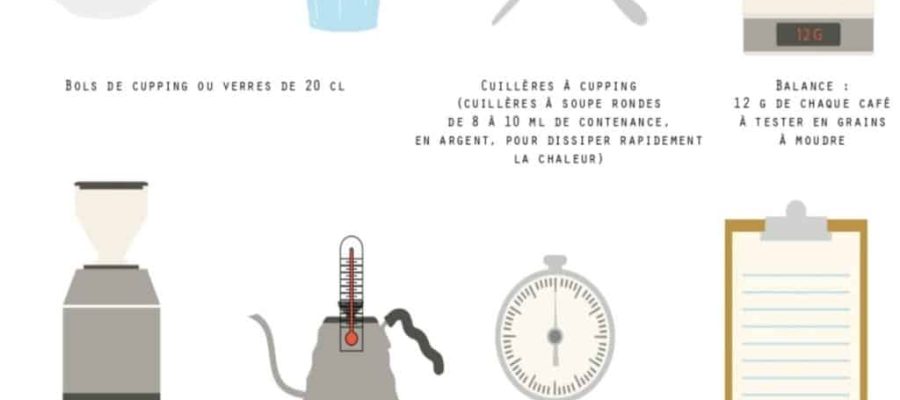
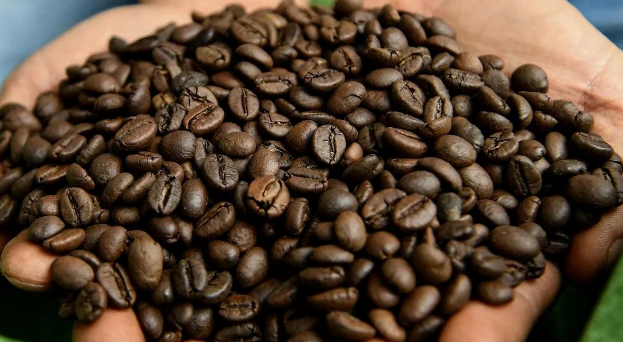
1st step: Grind the coffee evenly in a grinder, then place it in the cups (12 g per ball). Smell the freshly ground coffee. What does this mean for you? Is it pleasant, fragrant or not? This step called «dry nose» it is short because it is not possible to retain the volatile aromas. Write down everything that comes to mind.
2nd step: Pour the hot water into the bowl and start the timer. The grounds will then rise to the surface and form a crust. Let the coffee aromas evolve in contact with the water 4 minutes.
3rd step: Once the brewing time has passed, you will break the crust the coffee grounds with the back of the spoon and mix 3 times. At this time, place your nose just above the bowl and inhale the gases previously retained by the crust.
4th step: Some of the grind will fall to the bottom of the bowl. Wipe off the excess from the grind and smell again – this is the “wet nose”. Wait for the coffee temperature to drop.
5th step: The tasting can begin: it’s done deep aspiration (i.e. drinking out loud) in order to spread the aromas of the coffee on the palate and, retro-smellidentify them better. Evaluate both the aromas and the tactile sensations in the mouth. Is the coffee thick, creamy or, on the contrary, watery, similar to tea? Is the flavor left in the mouth pleasant, persistent or does it disappear very quickly? Run at least 3 steps to enjoy coffee at different temperatures.
6th step: It’s time for evaluation: get out your notes! As with any evaluation, it is essential to note down your impressions as the tasting progresses. The tasting card takes this into account 10 criteria rating from 6 to 10: smell, aromas, flavours, length in the mouth, acidity, intensity, body, balance, sweetness and clarity. After examining all these elements, we get a score out of 100. It is this result that will testify to the quality of a coffee.
Cupping: a scale for specialty coffee
The Specialty Coffee Association offers an international evaluation grid to determine whether a coffee can be defined as a specialty.

The different qualities of coffee:
- Only coffees with a score of 80 or higher will be taken into consideration specialty coffees
- Coffees with a score from 80 to 84.99 will be evaluated «Very good»
- Coffees with a score between 85 and 89.99 will be evaluated «excellent»
- Coffees rated from 90 to 100 will have the mention «exceptional»
Want to host a cupping session at home? Find our selection of Grands Crus coffees from the best origins on meo.fr for an exceptional tasting.
latest posts published
The Golden Café turmeric recipe
Definition: Hazelnut coffee – Cafés Méo
The definitive guide to coffee capsules: compatibility, flavors and problems for the planet

Is coffee high in calories?
What is the difference between instant and ground coffee?
How to make Italian coffee
Cold Brew: history and recipe for a refreshing revolution
What is robusta coffee?
How to clean the coffee machine