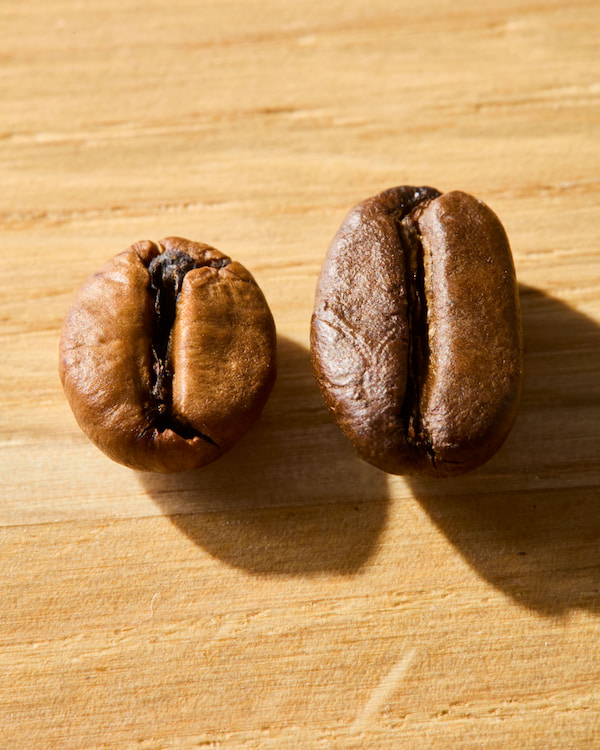
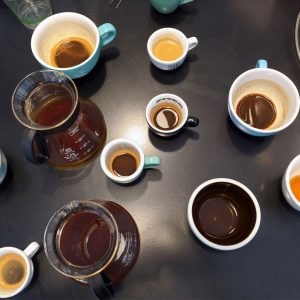
At one point I promised some users who commented on the blog articles that I would write something about their experiences with different types of coffee. In the meantime, two or three years have passed and I haven’t written any articles about it, even though I have often commented on this topic on the forum. And maybe I did well, because I managed to get out of the trap of shiny packaging.
I won’t make a coffee anthology, because there is plenty of material on Google, but I want to do a bit of cleaning up of the «beautiful stories» told by traders in the sector, finally discovering which beans are the best.
Roasted coffee = thermally prepared agricultural product!
To better understand which coffee is better, we will have to realize that we are talking about an agricultural product, subject to thermal preparation, perishable, which, like any apple or apricot (not to mention fried/baked/boiled foods), should be consumed as fresh as possible. Also, when you go to the market, what kind of apples do you ask the man? Rabbit Face, Voinesti, Jonathan, Idared, Florina, etc. Each variety has its variations and can come from certain areas or even from certain orchards, appreciated by some or others. It would probably be disturbing if these apples were put in an opaque bag, not knowing at the time of purchase what color they are, what they smell like and, to top it off, the shelf life should be on the order of years, raising questions about the taste and naturalness of preservation. Of course, each variety has its own characteristic aroma that once won you over, has a specific shape, a memorable taste, and you want to know from the start what you are paying for.
Buuun! Now let’s reconsider the reasoning above, placing coffee as the central element. Shouldn’t coffee also be purchased based on its variety, the region it comes from, the type of characteristic aromas, the taste and the aftertaste it leaves on the palate? Shouldn’t we see the color so we don’t buy beans that are too burnt? Shouldn’t we smell it before buying it, feel it like an apple, examining it according to each person’s experience? And then, if an aromatic agricultural product is good as fresh as possible, why should we buy cereals without knowing the roasting date, which can remain in bags for a year or two? Furthermore, coffee “breathes”!!! Whether it’s on a shelf or in a bag, it permanently removes carbon dioxide. Along with it, the oils and other elements that give it its flavor are lost (slightly in the first month and then more rapidly). Putting it in a sealed, valved bag just means that it will oxidize a little harder, but it will still «breathe», regardless of the «famous» brand written on the package 🙂 After about a month, it will never be the same coffee as it was a few days after roasting, and I’m not talking about a barely perceptible nuance, but a profound gap in terms of change in taste and creaminess in the cup. This is why many producers try the expedient of adding robusta (an economical variety, with a lot of caffeine, bitter and without aromas), to add it in combination with arabica (a slightly more expensive, aromatic variety, a little creamy after 30 days of roasting) because robusta, even after a longer period in the bag, will give creaminess to the espresso, but none of the producers recognize that the price paid is the bitterness in the cup, characteristic of robusta. Some even go further and say that without a bit of robusta the espresso won’t come out! And the marmot wrapped the chocolate… With this reality revealed, does it still seem plausible to you that a “branded” coffee should have up to two years of guarantee and the roasting date should not be written on any packaging? Or they are probably right, because the beans don’t go bad, so they are under warranty, but it’s like drinking powdered cappuccino instead of fresh milk, i.e. a substitute for the original drink!
True pig stories at Horse Pills
«But wow, the beautiful advertisement with the stars, the glittering packaging, the magic and power of the brand, the advice of coffee friends, all together say that brand ours on the shelves.»
On these considerations, said or thought by others, to which I had a firm but civil response, I have been slandered in many discussions, blogs, forums, the last episode was on a women’s forum interwoven with stock advertising, where a woman denounced me, indignant at my request for quality in espresso/coffee, presenting herself as «a man who thinks he is superior and calls you stupid, to enlighten you too», according to the administrator! In short, it is better to deceive your delicate limbs with thrifty advice based on emag’s profit, rather than leaving links to truly useful articles! He’s hungry for money! I made this analogy because the same thing happens in coffee: what is promoted is good, it is glossy, it is colorful and it is recommended by the world, the newest online! However, I have taken this position where the world sees you as a stupid idiot talking about his world 🙂 And espresso drinkers have probably felt the feeling. I discovered that in reality there are two great psychological thresholds: understanding that for an espresso you really need a separate coffee grinder (therefore not included in the machine) and understanding that it is not branded coffee that brings that creaminess and richness of unmistakable aromas to the cup, but freshly roasted coffee! In terms of nonverbal language, anyone who doesn’t believe you when you say this will look at you with a raised eyebrow…
I couldn’t end the «stories» category without a few words about «special coffee for espresso», as written on many beautifully colored packages, regardless of brand. Surprise or not, and in this case we are faced with a manipulation carried out by the manufacturer, precisely to diversify its range. At first I was also wondering why the gentleman would write that it is for espresso? If it is already ground, from the beginning it has nothing to do with the espresso, because it has lost the aromatic oils. So there is no standard grind for this type of coffee preparation. Thirdly, if there are beans inside, their type or the proportion of the robusta-arabica blend, once again, has no positive importance in the cataloging of a good espresso. Normally robusta has nothing to do with the world of espresso (with a few exceptions, when it is of excellent quality and fresh and those who drink it really want it), because it accentuates the bitterness in the cup, especially if it is roasted stronger or if the Arabica in the blend is ordinary.
And this is how we get to the truth…
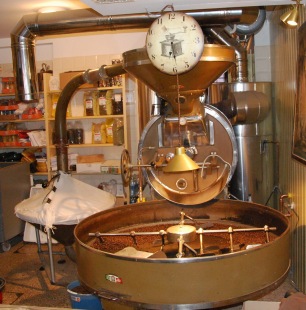
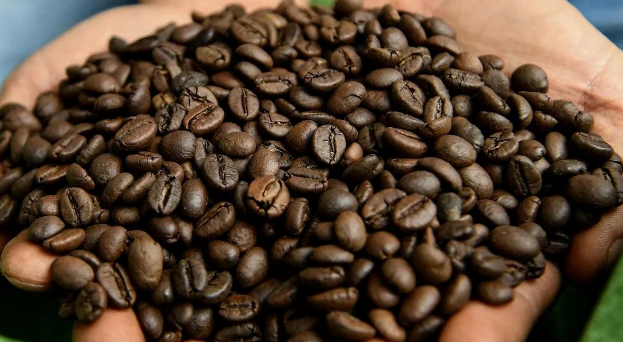
So which coffee do we drink in the end and which is the best? Simple: FRESH ROASTED COFFEE! This is a new concept to many of you, as it was to me at some point. This does not have a brand but a variety. When you go to a bakery ask for a Colombia Supremo, an Ethiopia Yirgacheffe, an El Salvador, a Brazil Santos, etc. or a mix between several types. Just like in the apple example, we choose varieties, not brands! Almost all good coffees are arabica, but there are also quality robustas, freshly roasted, for those who want more strength and harshness in the cup (personally I do not recommend such combinations). To make you understand better, some enthusiasts and with an entrepreneurial spirit bring green coffee from abroad in big bags, directly from African farms or through large intermediaries such as the famous Inter-American ones, coffees that they roast in their laboratories, the buyer having the privilege of putting the beans roasted for a day or two in the coffee grinder! Precisely this freshness gives flavor to the espresso (and not only), because you have the possibility of being in another world for a few moments, sensing the aromas of chocolate, currants, cherries, etc. in a concentrated and creamy liquid. Be careful though, it is not necessary to recognize them individually (it takes a lot of experience), but your taste buds will feel that they are really put to work! That’s why, no matter how expensive and famous a coffee brand is, the beans inside it will never taste like a 60-100 lei/kg fresh coffee. And try 100g of coffee, when you have the chance, comparing your favorite coffee with that of a national or international roaster. You will be surprised! The problem is that Romanians have difficulty understanding this, which is why few cities are lucky enough to have one or more bakeries. To convince you that he is not lying, the trader who sells freshly roasted coffee should own a machine of this type (roaster):
Of course, confusion can also occur, because not all freshly roasted coffees are on transparent shelves, and at the same time, not everything visible/tangible on a shelf is fresh. There are international or national roasters who prefer to package their beans (but they put the roasting date and write that it is best to consume them in a few weeks, not two years), and others who store them in different containers. At the opposite pole, a negative example would be the shelves full of «spoiled coffee» in Kaufland, Cora or other supermarkets/hypermarkets, where various dubious suppliers, who use substandard and substandard coffee in the prelaboratory, serve you Irish coffee, vanilla coffee or other rubbish! Attention!
And so, over time, you will end up exploring hundreds of assortments and combinations, without depending on a specific brand, which in any case will never tell you what you have in the package, other than some invented superlatives. You will also find that the bitterness you feel in the case of many coffees also comes from the roasting method! This is an essential aspect and over time you will be able to choose your favorite bakery yourself, depending on the quality of the beans, the degree of roasting, the origin of the coffees, etc. I prefer softer roast beans, but other espresso lovers prefer a medium strength. I prefer to buy from multiple roasters, so I can explore different flavors and roasting ways, other espresso lovers are loyal to just one. Right here lies the key to the beautiful stories about coffee, more precisely the fact that page after page you end up opening a mysterious and extremely exciting book, being absolutely free to travel to any corner of the world. There are many famous cafes in this world, where the great minds of humanity have found inspiration in a cup of coffee! Do you think they would have had so much enthusiasm if they had poured the hellish bitterness of Tchibo Sicilia beans or horseradish soup from Jacobs or Lavazza down their throats? Let’s be serious! And grandmother Johann Jacobs or Julius Meinl, when they were alive, had a small bakery where they delivered small quantities of quality fresh coffee. But the fact that they developed their business or that a name was bought for them, turning everything into a mixer of marketing strategies, has nothing to do with the finesse sold in their little shop. Take a break and realize that many of you are drinking images, not quality coffee! And it’s not a reproach, I can’t afford something like that, but it’s an invitation to leave the confines in which more and more companies from various sectors see us!
The next article will be dedicated to all the bakeries in the country, because I really want to create a database with all the traders who sell quality in this country!
latest posts published
The Golden Café turmeric recipe
Definition: Hazelnut coffee – Cafés Méo
The definitive guide to coffee capsules: compatibility, flavors and problems for the planet
Is coffee high in calories?
What is the difference between instant and ground coffee?
How to make Italian coffee
Cold Brew: history and recipe for a refreshing revolution
What is robusta coffee?
How to clean the coffee machine