
If you have read at least some articles on espressoman.ro, you will probably have noticed that I am talking about high standards, which I want to be applied at home too. But when you spend 200E on a machine, Gaggia Espresso Pure in my case, it’s a little difficult to understand exactly what an espresso machine costing several thousand euros can offer you. Considering that you already have a good grinder (see my article on grinders), sometimes the taste buds notice an exaggerated (acaral) acidity or an unjustified bitterness resulting from the quality of the coffee. And you wonder where it comes from? One of the main causes, I repeat, excluding the quality of the beans, is the excessively high pressure with which the water enters the filter holder, the manufacturer sets its devices at around 14-15 bar, in order to also use the pods. What is really happening? The pump pushes water into the boiler through a valve. To create a certain water pressure, the valve contains a spring with a «ball» in the head, the spring pushed by a kind of threaded tube, which presses the spring and the ball. Unscrewing this pipe will decrease the pressure, more water will be discharged through it and inserting it will increase the pressure. The problem with these appliances is the valve is made of plastic and has a thread that is too small. It is preferable to replace it with a more powerful one, from the Classic, but since it is not available in Romania, it is simpler to unscrew the tube we were talking about, insulating the thread with a hemp-type material and some gaskets. Thus the pressure drops within the normal limits of 9-10 bar and the taste of the espresso improves noticeably! How come? Softpedia forum user Fane has «patented» the method!
I can assure you right away that the movement is not at all complicated, but not very simple either, as regards the small annoyances that may arise. If you have a good grinder and are satisfied with the result I tell you not to worry about making the modification if you don’t have a bit of technical knowledge – electrical and system engineering. I really didn’t have it and I struggled a bit!
1. Unplug the device from the power, remove the water tank, and prepare a Phillips screwdriver and a straight screwdriver.
2. Remove the plastic steam valve by unscrewing it completely, then pull it out and screw it back in so it doesn’t leak.
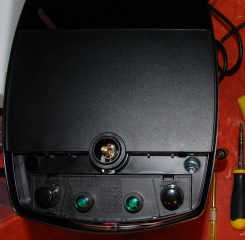
3. Using a small right-hand screwdriver, gently push the chrome plate through the two slots it has. You will exit the clamps and reveal the first two screws, which together with the third (tank area) will allow you to extract the black cover. Don’t remove their contacts because there is no need and you may never find them again. Also, be careful not to touch the short wires (which connect it to the device) to the boiler that will be heated at any given time.
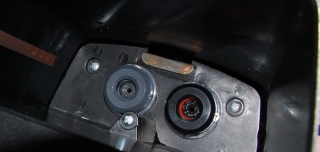
4. Now you have the image of the inside but without access to the valve area. 4 screws will separate you from the happy moment. Two in front, next to the boiler, in the corners, (the boiler screws must not be loosened) and two in the back, under the water tank.
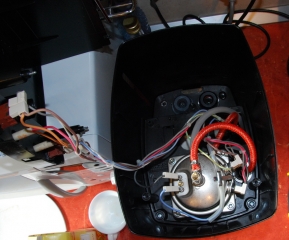
5. After unwinding completely, grasp the round hole in the center with the thumb of one hand and with the other hand lightly press on the power plug area. Thus, by gently pulling upwards, the entire mechanism will come out, which you can place on a table, but be careful not to drop the black cover on which the contacts and start buttons are located. A plastic mastodon will be revealed next to you
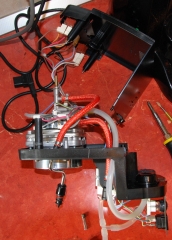
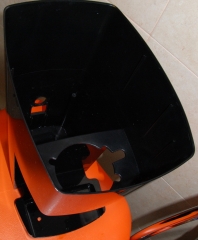
6. Identify the circuit valve, gently pull the tube until it comes out, pressing with your nail on its end, unscrew the valve.
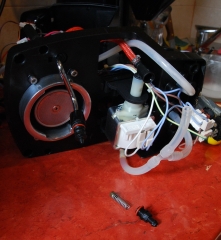
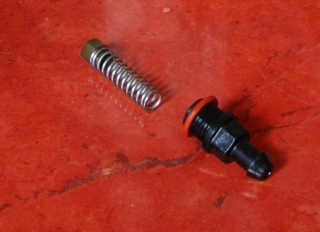
7. Here’s the most «complicated» part. The decision to seal that thread must be made. After several attempts I found some very tight, thicker gaskets that I put on the valve. I left the original red gasket in front, and covered the rest of the thread with a bit of nylon-type material (good gasket, bad gasket, original gasket). He still uses hemp (like plumbers) or Teflon tape (like Fane said).
8. Screw the valve back in, but not too tight as it will return to the previous pressure of 14 bar, but not too loose as it will drip.
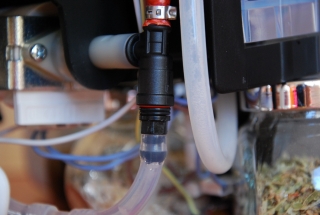
9. Because I put it in and out of the case for approx. seven times, place and test the mechanism on the table, on some supports (I chose the jars), insert the pressure gauge well, REMOVING THE SIEVE from the filter holder, position the water tank and then connect the machine to the electricity. When the activation light is on, turn on the pump, observe the pressure on the pressure gauge, slightly unscrew the filter holder. Then carefully examine the valve to see if it is leaking anywhere. If you didn’t find the pressure the first time (10.5 bar), scroll down as much as possible, then repeat the operation described above, still carefully observing the valve. If everything is ok, repeat the operation to make sure nothing drips onto the wire. From experiments I deduce that it is better to unscrew the valve until reaching 10.5 bar. During the actual extraction the pressure will be one bar lower than that of the test. This is what I noticed on the new Bezzera espresso machine I have, equipped with a pressure gauge.
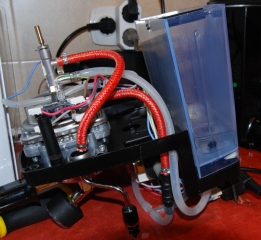
10. Insert the mechanism into the plastic case and tighten the screws. They are all the same size so you can’t go wrong. Be careful during reassembly that the threads of the black cap do not stick to the boiler!
That’s all!
I also show you a 22 second shot, a bit rushed, taken shortly after the edit. You can see those streaks of color, at the beginning of the extraction. In the sequel, which was better, the moment lasts even longer. Until the edit, I don’t know that I’ve ever seen those colored stripes. I hope it’s not autosuggestion…


As regards the taste, the change is noticeable, i.e. the disappearance of the too bitter/too acidic accents, leaving the flavor of the coffee free as it should be. But don’t expect to recognize the change in taste without having some experience behind you, that is, at least a year spent trying all types of espresso. In practice, the acidity, body and aroma of the coffee can now be appreciated more clearly. It’s not a transition from heaven to earth, as was the case when I switched from ground coffee to the small Gaggia MM Steel coffee grinder, or from the MM Steel to the Cunill Tranquilo semi-professional coffee grinder, but if you have sensitive taste buds you’ll notice the improvements.
As a negative «postoperative reaction» I noticed a noise «like a diesel engine» that the plastic case makes when the pump is started, probably because they are touching somewhere. I took everything apart and reassembled it but the vibration persists. I have nothing to do!
Get to work!
latest posts published

The Golden Café turmeric recipe

Definition: Hazelnut coffee – Cafés Méo
The definitive guide to coffee capsules: compatibility, flavors and problems for the planet

Is coffee high in calories?

What is the difference between instant and ground coffee?

How to make Italian coffee

Cold Brew: history and recipe for a refreshing revolution

What is robusta coffee?

How to clean the coffee machine