*article written by G. Serban, member of the Espressoman community
I started photography early, around 12 years old. For about 20 years I have been «artist photographer«, those around me, when they saw my photos, said they were «artist«Now I’m gone artistI like document, to discoverON understand. The child’s life, having fun with friends, cooking at home and sometimes what the people around do. I don’t want to do it beautiful images, Fantasy but photographs that represent the subject, as I feel it. [Acum doi ani am scris o carte despre asta, impreuna cu prietenul meu Voicu (Bojan)]
With coffee it’s the opposite. I started late. Until 3 years ago I had never drank coffee.
Where others found it in the coffee cup art I found a bitter juice. Until the day I replaced my coffee filter with a bean-powered espresso machine. With the push of a button, it grinds them, draws water from the tank, resulting in 30ml of coffee in a cup. By adding a little milk you get something really pleasant to the taste, with the right aroma.
The filter coffee, even though I drank as much as I could, was undrinkable. I wondered where the difference came from, so I left it the art of coffee aside and started doing it document. I quickly realized that technique is everything, the espresso machine uses another method to extract the aromas from the coffee. Ground coffee (7 grams) is pressed into a sieve through which hot water under pressure is sent. Compared to filter coffee (or coffee in the kettle, in the sand, in the French press, etc.), the short extraction time brings out the divine aromas. Furthermore, the extraction stops exactly at the moment when the caffeine and bitter tendency of the ground coffee should be eliminated. Now I have a quantity in the cup, it’s really small, 30 ml, flavored with a little caffeine which gives me pleasure.
I called my friends and colleagues for an espresso, I bragged, they got infected. The future is espresso! In the office we took an espresso machine with capsules (Nespresso brand – business), beautiful cups, a milk frother. Everything was amazing for months, until I drank an espresso on holiday in its home country of Italy. Everywhere, in the crowd, at the train station, in the hotel, on the terrace, at the airport. What we have at home and in the office is much, much worse than what we drink there. Is it them? artists? I doubt it, I told myself. Producers choose the worst coffee and package it «specially» for export to Eastern Europe. I read in the newspapers, we are poorer that way. I brought coffee from Italy (2-3 better brands) and powered up the espresso machine. At the time, the change for the better was easily noticeable but not fundamental. It must be a secret somewhere.
In the first more serious readings, I discovered that even in the preparation of espresso coffee there is a golden rule, even more complicated than in photography, with more variables. 7 g of ground coffee should be pressed into a cylindrical sieve with a force of 20 kg using a metal press (pressor). The water passing through the coffee pod thus formed must be heated to 92 degrees (hotter water gives more bitter coffee, colder it is bad). The pressure of the water passing through the coffee is also fixed, around 9 bars. Finally, the 30ml of espresso must flow into a pre-heated cup with a rounded bottom in 25 seconds. Coffee that drips in more than 25 seconds is over-extracted (bad, bitter) and coffee that drips in less than 25 seconds is under-extracted (kind of like clear water, without flavors). It’s clear, it’s about of the techniquenow the artjust like the correct exposure in the photo.
The home espresso machine prepares a coffee in less than 10 seconds. The office Nesspresso is even «more efficient», it extracts 60ml in 5-10 seconds! When purchasing I chose them specifically because they had high pressure, 15 bar for the home machine and 19 bar for the Nespresso machine. Just like the expansion of camera megapixels, café marketing has also done its job in the case of espresso machines. And we rushed to buy them because they have high blood pressure or a lot of megapixels. I deduce that since the pressure is excessive, the water flows too quickly through the pod and I have an under-extracted coffee in the cup. I start the search again, how I could measure/change the extraction pressure. I get into technical questions without wanting to. I discover that my vending machine with an Italian name is one made in China, full of plastic inside. Nespresso too, only it’s promoted with style by George Clooney. To have a longer extraction time the only adjustment I can make is to change the granulation of the grind, but on my machine this is already set to minimum and with Nespresso the grind is fine in the capsule. What else?
Ready! I promise my wife that she will soon drink the best coffee in town at home, I swear that this year I will not buy a camera and will buy a semi-automatic espresso machine. From the classic one, in stainless steel, with the copper boiler, with many levers where you put the coffee in a filter holder and press it manually with a stainless steel tamper, making a mess. Mount the filter holder in the espresso machine and start the extraction (simple, timing 30 ml in 25 sec.). I find that they really aren’t available in Romania, because very few people buy something like this here, the few «strays» like me on the forum direct me to foreign online shops. The jewel arrives in 2 days. Then I buy the most expensive ground coffee (Davidoff, before I used Illy and Lavazza). As an expert I put 7g of coffee in the filter holder by pressing it, the pressure is 9 bar, the water temperature 92g celsius. I start the extraction and the timer at the same time. Everything seems perfect. It just seems like it, because the 25ml graduated glass fills in 5 seconds. I taste the resulting liquid…I swear I’ve never drunk anything worse. It’s a spectacle! I bought an Italian espresso machine from Germany, accessories, expensive coffee and I make much worse coffee than with the old plastic filter bought at a discount from Domo.
Davidoff coffee, even if he says it that way expressedit is ground too coarse «by the factory» and water passes through the grind too easily. Of course I still had to buy something. Grinder! This time I read everything correctly. Mom’s old cartilage is not good. It doesn’t grind evenly enough and also heats the coffee (causing all the flavors to evaporate). I discover a whole world of knives from coffee grinders. The material they are made of, their length, shape and rotation speed are discussed in depth. For a perfect espresso, a uniform extraction of all the coffee granules is necessary. So the (extremely small) ground coffee granules must all have the same shape and size. So I definitely choose a grinder that uses flat, ceramic knives, with a low speed that doesn’t heat the coffee. To avoid a situation where I can’t grind such that I have 30 ml in 25 seconds, I choose a continuous grinder – without predetermined grinding steps – with which I can grind absolutely any micrometer size I want.
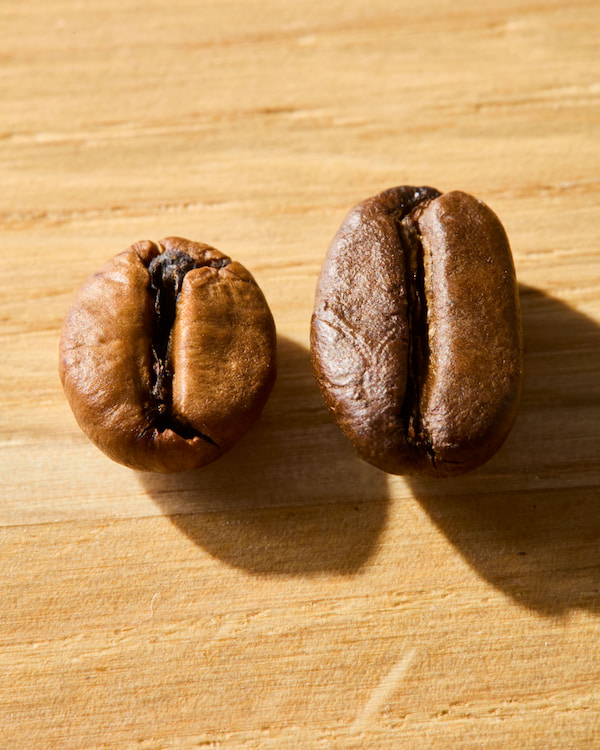
I want to burn another stage, without failing. I’m interested in coffee. The history of Nespresso is clear: professional tasters choose the best coffee beans and combine them to obtain a tasty taste, etc. blah blah Another true one art. That is, something we cannot do. Surprisingly Illy, Lavazza, Segafredo, Davidoff, Jacobs sell exactly the same story + Alintaroma. The truth is simple. Coffee is about varieties, not brands. There are excellent quality varieties of Arabica coffee, grown mainly in South America, in the mountains above 2000 m above sea level. Coffee is more expensive, contains little caffeine but is very aromatic. At the opposite pole is robust, economical, industrially grown coffee (especially in Africa). It’s strong (the weakest robusta coffee has double the caffeine of the strongest arabica) and free of flavoring. The coffee brands mentioned above rarely specify what they put in the bag (usually if it isn’t specified it definitely means it’s bad, robust coffee – at the price of expensive coffee) and absolutely never says the variety or country of origin (e.g. Brazil Santos, Jamaica Blue Mountain, Guatemala Antigua, etc.). Furthermore, the most important thing is that a coffee bean is packaged it loses its qualities within 3-4 weeks of roasting. Ground coffee loses absolutely all its qualities within 10 minutes of grinding (I tested it myself). I discover a big scam done to the proletariat (i.e. me), by the brands that package the coffee. But I don’t have time for them, I’m only interested in having a perfect espresso in the cup.
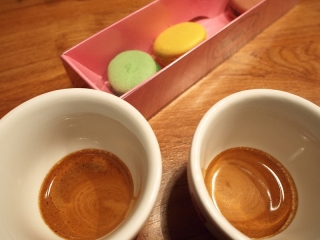
So I look for freshly roasted, locally sourced Arabica coffee. Surprisingly, I discover small roasters in Romania that roast your coffee (in small quantities to consume it fresh) and the next day it arrives by courier. The price is even lower than the old coffee, of poor quality, well packaged, found in the supermarket of the big coffee brands.
We repeat the golden rule: 7 g of ground coffee, properly pressed with 20 kg of force, water pressure at 9 bar, temperature at 92 degrees Celsius, flow rate of 25 sec – regulated by the degree of grinding, 30 ml of aromatic coffee in a round, pre-heated cup, Arabica coffee of origin, freshly roasted and freshly ground. Crazy! The same in the cup, in the mouth and in the aromas on the nose. I think back to the photo. That’s where you can break the rules, I’m starting to do it with ease even with espresso. I overdose the coffee and compensate by grinding, I extract at different temperatures, everything changes depending on the type of coffee, the degree of roasting and the amount of grinding.
The engineer in me understands why self-respecting bars don’t have automatic machines, but a barista who makes coffee manually. No automatic coffee machine can make decisions based on the type of coffee, the harvest, the roast and finally the taste. The consumer in me also understands why good coffee is rarely drunk in Romanian bars. The coffee is old, sometimes it has been ground for days, the grinder and espresso machine are not regulated (temperature, pressure) or the barista is disinterested.
In the case of the perfect espresso it is the same as in the photo. Beyond art it exists in the first place understanding, documentation, discovery. Who else is willing to try?
Espressoman.ro thanks G. Serban (www.gserban.com) for his contribution. Other members’ articles follow (PID, home roast)
latest posts published
The Golden Café turmeric recipe
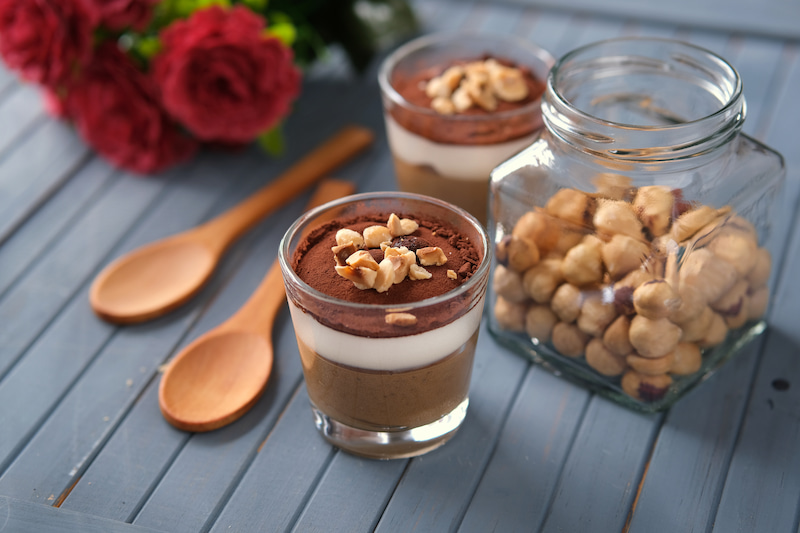
Definition: Hazelnut coffee – Cafés Méo
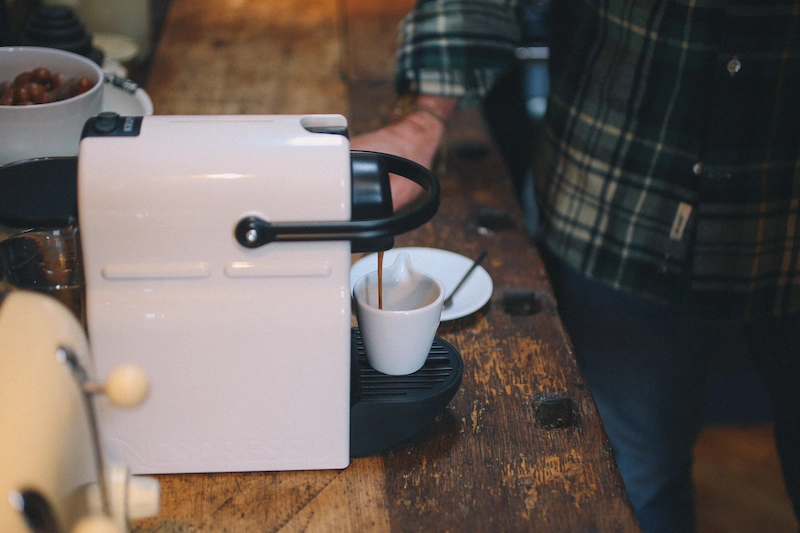
The definitive guide to coffee capsules: compatibility, flavors and problems for the planet
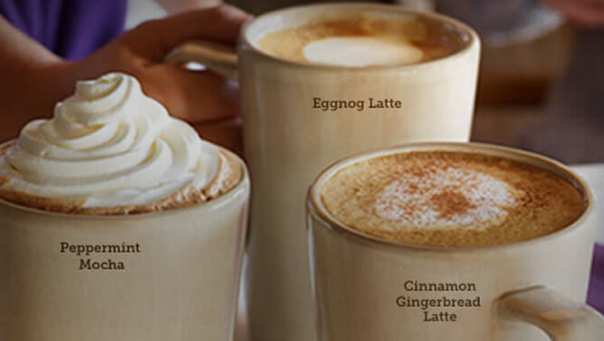
Is coffee high in calories?
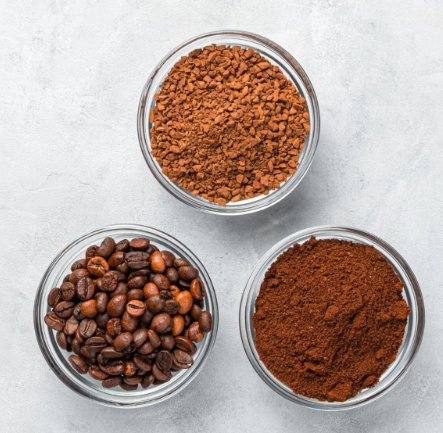
What is the difference between instant and ground coffee?
How to make Italian coffee
Cold Brew: history and recipe for a refreshing revolution
What is robusta coffee?
How to clean the coffee machine